From the level of DNA to that of phenotype, life may be viewed as an articulation of code. Within such a model, phenotypes are a kind of abstraction of the DNA code. Starting with the genome, the DNA winds its way through RNA, proteins, and cellular process outward into the world beyond, and in the process it expresses an abstracted projection of itself onto the “plane” of the phenotype situated in its niche. There is one phenotype, our own, that has evolved to where it can design its own generative code.
Among the many codes creating our human world is the digital, the binary lingua franca of software engineers. Written at one level as a linear script of ones and zeroes, and then expressed as other media and phenomena, coding underwrites the videos we engage with, the online menus from which we order, the diagnoses radiologists make, the security we crave, and the bombs we drop.
Code serves to translate phenomena into a language distinct from the phenomena themselves: atoms, proteins, facial expressions, and the songs we love become symbols, numbers, or other grammars. This conversion is useful; it provides a way to communicate, utilize, predict, understand, and simulate phenomena. Scientific progress is impossible without a positivist kind of code, whereby a model of the world is generated through encoding phenomena into facts, mechanisms, systems, and laws that cohere logically. How do we understand an atom, for example without the scientific language encoding it?
The language of the Anthropocene is code. It is coding that mints and maintains cryptocurrency and it is the language of the lightspeed communication driving financial transactions occurring every millisecond of every day. We speak to one another through encoded devices; we learn and work through screens that reconstitute our bodies and voices through the transmission of code. We play video games that are sophisticated assemblages of code, and we interact with folks online using coded exchanges. An entire meta-world is being constructed from code alone.
As code comes to mediate so much of our lived experience, we face some important questions: how is our immersion in the encoded world affecting our lives? Might something vital, something unencoded or unencodable, get lost in translation? Like all abstractions, code will leave information out. Even the most sophisticated bit of code is invariably inadequate to capture the rich complexity of embodied, unmediated engagement. And what are we to make of miscommunication, misinformation, and deception by design? Code, after all, is also the language of espionage, deception, and surveillance.
This conference intends to examine the various ways the digitalization of life and the growing metaverse may be separating us from an original, direct, and less abstracted form of life. What might the benefits be? And what are the costs and dangers?
+++++++++++++++++++++++++++++++
Saturday 10/15:
In Search of Lost Time
10:00AM - 12:00AM
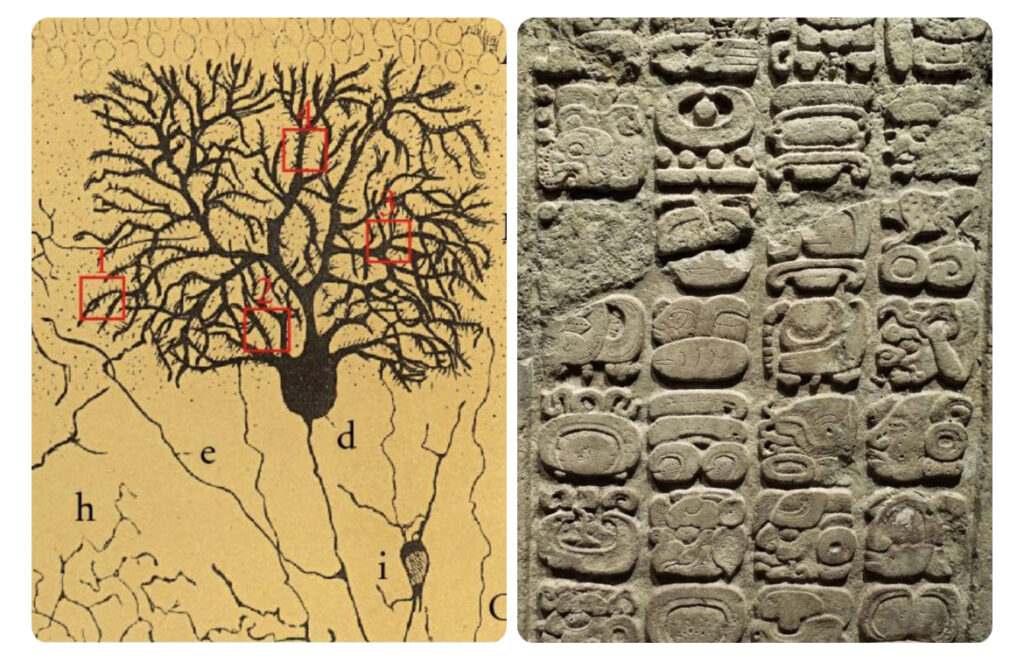
How we discover codes, bearers of meaning, and how we reconstruct that meaning in archeology & paleoanthropology, in psychoanalysis, and in neuroscience research on memory.

Manipulated Perception? Fakery, Authenticity, and the Birth of NFTs
1:30PM - 3:30PM
What counts as true and how we might know the truth in the age of coding. A discussion about misinformation, the decentralization of knowledge, and the struggle to establish what is real. Encoded algorithms help to provide security but also risk an encroachment on privacy. The ability to create convincing but misleading perceptions, to create false narratives and false worlds, has great potential for abuse.

Coding, Fiction, Metafiction - the Parcellation of What Isn't There
4:00PM - 6:00PM
The humanities deal with the manipulation of ideas. Ideas can be encoded, metabolized, and contribute to cultural evolution. What roles do cultural memes – be they fact, factoid, or fiction – play in what goes on. Does fiction provide any insight into this complex dynamic?
+++++++++++++++++++++++++++++++
Sunday 10/16:
Are Natural Language Generators for Real?
11:00AM - 1:00PM
The program GPT-3 can create language that gives the impression that it is thinking. What will our interaction with robots of greater and greater verbal agility mean in the near future? What sort of Other will these robots become, evolve to? Is awareness of a code incompatible with any form of realism, and what does this mean for epistemology and ethics?
Is the Universe a Metaverse
2:00PM - 4:00PM
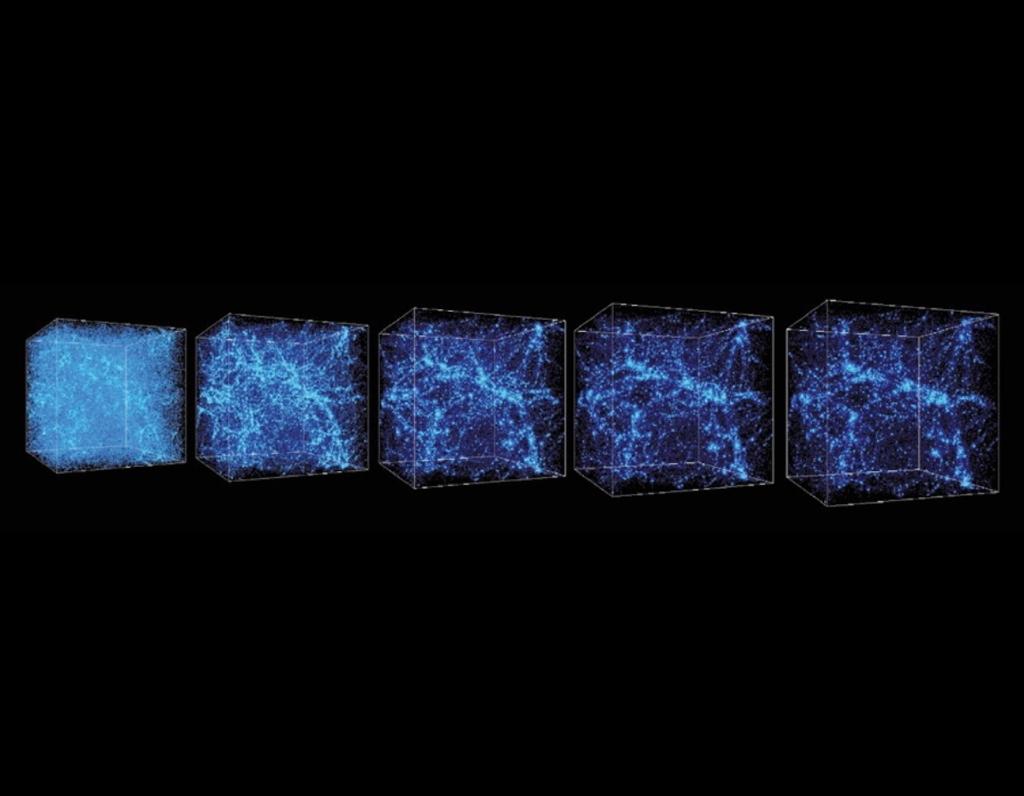
Our panel will discuss the suggestion that we have been living in a sort of metaverse all along. This claim starts with the notion that the Universe evolves as one giant algorithmic computation, and that information is the basic substance. A variation on this line of thought asks the question: could we be living in a simulation à la the Matrix.
All Helix Center events are free and open to the public, including this one!
Roundtables are streamed live our website and the recording remains available after the event events.
This is a past event that happened on October 15-16, 2022.
Participants
Emily Adlam
Postdoctoral Associate, Rotman Institute for Philosophy of Science, University of Western Ontario
Ned Block
Silver Professor of Philosophy, Psychology and Neural Science, New York University
György Buzsáki
Biggs Professor of Neuroscience, New York University
David Chalmers
Professor of Philosophy and Neural Science, New York University
Co-Director, Center for Mind, Brain, & Consciousness, New York University
Kyunghyun Cho
Associate Professor, Computer Science & Data Science, New York University
CIFAR Fellow, Learning in Machines & Brains
Elias Dakwar
Associate Professor, Clinical Psychiatry, Columbia University
Laura Edelson
Postdoctoral Researcher, New York University
Katherine Elkins
Professor of Humanities and Comparative Literature
Director of The Integrated Program in Humane Studies
Founding Co-Director KDH Lab
Kenyon College
Christopher Fuchs
Professor, Physics, College of Science & Mathematics at UMass Boston
Sylvester James Gates
Clark Leadership Chair in Science, Distinguished University Professor & Regents Professor, University of Maryland
Noah Giansiracusa
Assistant Professor, Mathematics & Data Science, Bentley University
Peter A. Gloor
Research Scientist, Center for Collective Intelligence, MIT's Sloan School of Management
Andrew Guess
Assistant Professor, Politics & Public Affairs, Princeton University
Mark Hansen
David & Helen Gurley Brown Professor of Journalism & Innovation, Columbia Journalism School
Director, David and Helen Gurley Brown Institute of Media Innovation
Jonathan Kramnick
Maynard Mack Professor of English, Yale University
Susana Martinez-Conde
Professor of Ophthalmology, Neurology, and Physiology & Pharmacology, SUNY Downstate Health Sciences University
Michael Novacek
Curator & Professor of Paleontology, American Museum of Natural History
Yotam Ophir
Assistant Professor, Communication, University at Buffalo
Francesca Rossi
IBM Fellow & IBM AI Ethics Global Leader
Nikos Salingaros
Professor, Mathematics & Architecture, University of Texas at San Antonio
Karen B. Stern
Professor of History, Brooklyn College of the City, University of New York
David Sulzer
Professor of Psychiatry, Neurology, Pharmacology, Columbia University & New York State Psychiatric Institute
Marc Van De Mieroop
Professor, History, Columbia University
Dennis Yi Tenen
Associate Professor, English & Comparative Literature, Columbia University