Dave Sulzer is a professor of Psychiatry, Neurology, Pharmacology, and at the School of the Arts at Columbia University and New York State Psychiatric Institute. He received a PhD in biology from Columbia University. His lab has published over 250 studies on synaptic function, particularly of the basal ganglia and dopamine systems, and neuroimmunology, in normal and diseased states that are cited over 50,000 times (h-index 198). He is the founder of the Dopamine Society, the Gordon Conference on Parkinson’s Disease, and the journal Nature Parkinson’s Disease. He has received awards from the McKnight, Simons, Helmsley, NARSAD, Huntington’s, and Aaron Diamond Foundations and the Universities of Jerusalem, Minnesota, University College London, and national science foundations of Israel, Austria, Portugal and given named lectureships at the National Institutes of Health, Harvard, Yale, UCSF, Emory, UC Irvine, and the Vatican. He has trained 21 graduate students and 31 postdocs of which 8 are current, and his students and postdocs have received Fulbright, Marshall, and Regeneron awards for their work in the lab: past trainees are current professors at Columbia, Rutgers, Cornell, Yale, Lund, Pittsburgh, Jefferson, Tufts, Emory, Karolinska, Ecole Normale Superieure, and NYU, while others run pharmaceutical and biotech companies and one is the science editor at the Wall Street Journal. Sulzer is also a composer and musician, and his new book, “Music, Math, and Mind” was recently published by Columbia University Press.
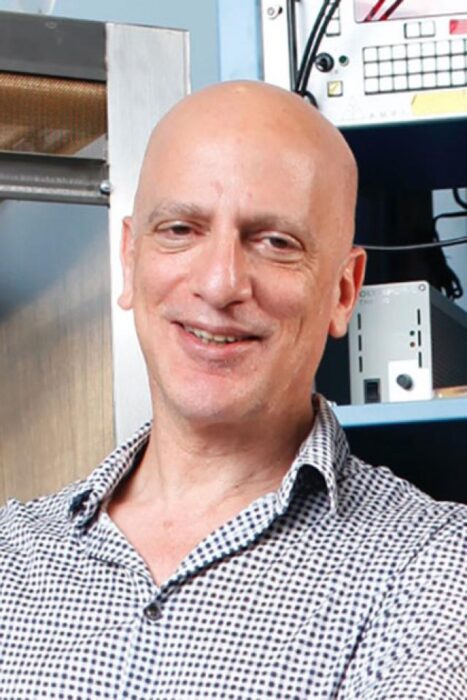
David Sulzer
Professor of Psychiatry, Neurology, Pharmacology, Columbia University & New York State Psychiatric Institute
Participant In These Roundtable Discussions
Sat
Oct 15th
2022
Oct 15th
2022
Watch
Coding and the New Human Phenotype
This conference explores the concept of life, knowledge, and experience through the lens of “code,” examining how meaning is encoded, transmitted, and transformed across biological, digital, and cultural systems. Through five roundtables, it investigates how we reconstruct the past, navigate authenticity in a digital world, interpret fiction and ideas, engage with AI-generated language, and consider the possibility that reality itself may be fundamentally computational—together asking what is gained, and what may be lost, as code increasingly mediates our understanding of the world.
Sat
Oct 15th
2022
Oct 15th
2022
Watch
Coding and the New Phenotype: In Search for Lost Time
This roundtable explores how meaning is encoded and reconstructed across fields such as archaeology, psychoanalysis, and neuroscience. It examines how memory and interpretation allow us to recover and understand lost or hidden information.
Sat
May 10th
2025
May 10th
2025
Watch
Neurodiversity
This roundtable explores the concept of neurodiversity – recognizing variations in neurological function – challenging conventional notions of deficit and considering empathetic approaches to support individuals with diverse cognitive experiences.