Farzad Mahootian is a Clinical Associate Professor of Global Liberal Studies at New York University. He has an interdisciplinary background (PhD Philosophy, Fordham; MS Chemistry, Georgetown). His research focuses on interactions between philosophy, science and society within the mythological imagination of technoscience and with guidance from process philosophy, biomimicry, artificial intelligence, and premodern sciences. His current collaborative research project is an AI-assisted study of multilingual alchemical texts, featured in a forthcoming special issue of Ambix, the Journal of the Society for the History of Alchemy and Chemistry. Other publications include, “Ideals of Human Perfection in Sufism and Transhumanism,” in Tirosh-Samuelson, H., et al., Building a Better Human (2012: Peter Lang); “Jung and Whitehead: An Interplay of Psychological and Philosophical Perspectives,” (with Tare-Marie Linné) in Held, B. & Osbeck, L., Rational Intuition (2014: Cambridge); “Paneth’s epistemology of chemical elements in light of Kant’s Opus postumum,” Foundations of Chemistry, (2013: Springer); “Kant, Cassirer, and the Idea of Chemical Element,” in Ghibaudi, et al, What is a Chemical Element? (2020: Oxford).
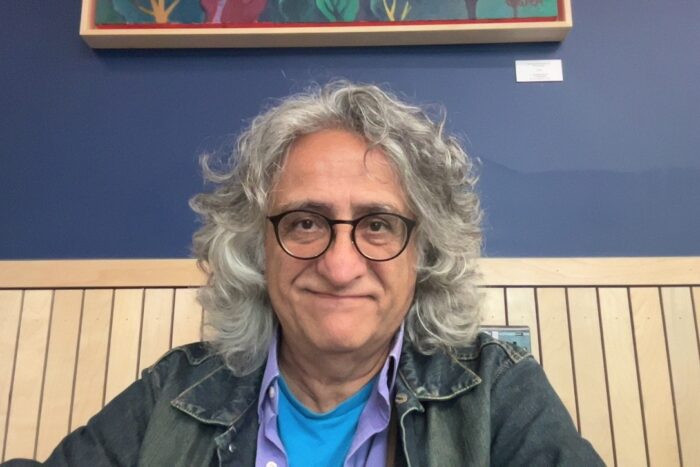
Farzad Mahootian
Faculty of Liberal Studies, New York University
Participant In These Roundtable Discussions
Sat
Apr 12th
2014
Apr 12th
2014
Watch
Synchronicity: On the Spectrum of Mind and Matter
This roundtable will examine Jung and Pauli’s concept of synchronicity as meaningful, acausal coincidence, and consider how such phenomena are approached at the intersection of physics and psychology.
Wed
Nov 5th
2014
Nov 5th
2014
Watch
Synchronicity and Other Mind Matter Conjectures
This roundtable will examine the relationship between mind and matter through the lens of Jung and Pauli’s concept of synchronicity and related ideas of dual-aspect monism and meaningful correlations between mental and physical phenomena.
Fri
Dec 1st
2017
Dec 1st
2017
Watch
Art and Science: The Two Cultures Converging
This series of roundtables brings together artists, scientists, and scholars to explore the intersections of science, art, education, and society through themes of collaboration, interdisciplinary practice, and STEAM education. Across the discussions, participants examine how these fields inform one another, how such collaborations are formed and sustained, and how they may shape future approaches to knowledge, creativity, and learning.
Sat
Nov 19th
2022
Nov 19th
2022
Watch
Living in Difficult Times
This roundtable explores how individuals and society can respond to today’s intersecting crises—ranging from public health and climate change to political polarization and global conflict. It considers how different fields and communities can work together to confront shared challenges and foster resilience in an uncertain world.
Sat
Mar 7th
2026
Mar 7th
2026
Watch
Where Have All the Isms Gone?: On the Evolution of Knowledge
This roundtable explores how traditional intellectual movements and paradigms have fragmented in the postmodern era, challenging the idea of coherent disciplinary progress. It considers how the internet, social fragmentation, and AI are reshaping how knowledge is organized, produced, and understood.