Michael Bess is Chancellor’s Professor of History at Vanderbilt University. He is a specialist in 20th- and 21st-century Europe, with a particular interest in the interactions between social and cultural processes and technological change. He received his PhD from the University of California, Berkeley, in 1989. His most recent book is Our Grandchildren Redesigned: Life in the Bioengineered Society of the Near Future (Beacon Press, 2015); its companion website is http://www.ourgrandchildrenredesigned.org/. His book, The Light-Green Society: Ecology and Technological Modernity in France, 1960-2000, won the George Perkins Marsh prize of the American Society for Environmental History. He has held fellowships from the J. S. Guggenheim Foundation, the American Council of Learned Societies, the National Human Genome Research Institute, the John D. and Catherine T. MacArthur Foundation, and the Fulbright program. At Vanderbilt Bess teaches undergraduate courses on the social and moral implications of human bioenhancement, World War II, twentieth-century Europe, and Western Civilization, as well as specialized seminars on environmentalism, the boundaries of the human, or utopian thought. His graduate courses include a survey of the historiography on twentieth-century Europe, and a semester-long workshop to train graduate students for teaching history at the college level. He is currently working on a book project entitled “What makes us human? From neurons to the Sistine Chapel.”
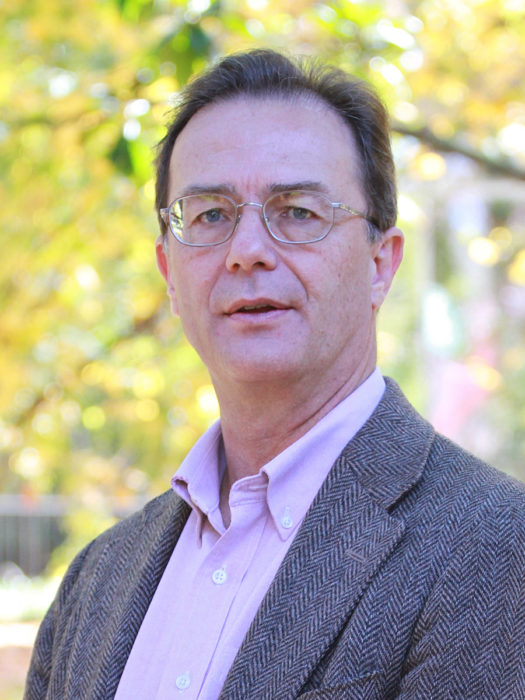
Michael Bess
Chancellor’s Professor of History, Vanderbilt University
Participant In These Roundtable Discussions
Sat
Oct 22nd
2016
Oct 22nd
2016
Watch
Embodied AI
This roundtable examines the concept of embodied cognition and its implications for artificial intelligence systems that integrate perception, action, and interaction with the physical world. It considers how technologies such as machine learning and natural language processing, when combined with sensory and motor capabilities, can move beyond abstract computation to engage with real-world environments, augment human abilities, and support complex tasks across domains such as healthcare, industry, and human–machine collaboration.