Kenneth Miller is the Peter Taylor Professor of Neuroscience, co-Director of the Center for Theoretical Neuroscience, and co-Director of the Neurobiology and Behavior Graduate Program at Columbia University. He received his B.A. from Reed College, his M.S. and Ph.D. (with distinction) from Stanford University, and completed his postdoctoral work at UCSF and Caltech. He is a founding member of the editorial board of Journal of Computational Neuroscience and has served as faculty for many years at various summer schools in Theoretical and Computational Neuroscience. He received the Swartz Prize in Theoretical and Computational Neuroscience given by the Society for Neuroscience, and has also been recipient of the Alfred P. Sloan Research Fellowship, Searle Scholar’s Award, and National Science Foundation Graduate Fellowship.
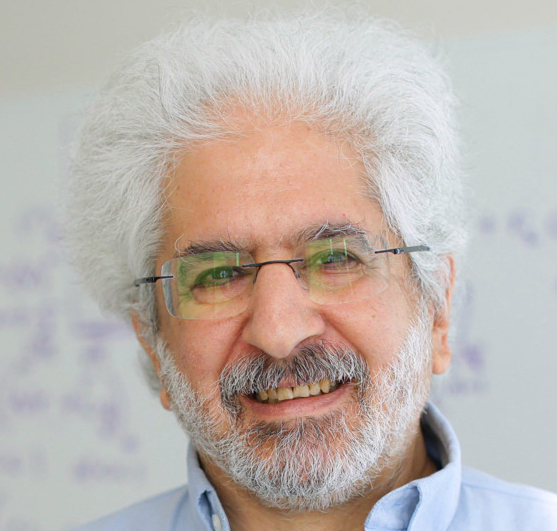
Kenneth Miller
Professor of Neuroscience, Department of Physiology and Director, Center for Theoretical Biology, Columbia University
Participant In These Roundtable Discussions
Sat
Sep 15th
2012
Sep 15th
2012
Watch
What Can Mathematics Teach Us About Mind/Brain?
This roundtable will examine how mathematical models in neuroscience help explain brain function and inform our understanding of the mind.
Sat
Feb 22nd
2014
Feb 22nd
2014
Watch
Biology of Mind
This roundtable will examine the nature of mind as it relates to biological systems, the evolutionary origins of cognition and consciousness, and the possibility of engineering artificial minds.
Sat
Feb 10th
2018
Feb 10th
2018
Watch
Mind Matters: Past, Present, and Future
This roundtable traces the evolving understanding of mind from ancient philosophical and theological conceptions to contemporary accounts grounded in neuroscience, cognitive science, and computational models. It considers how advances across multiple scientific disciplines have reshaped ideas of mental phenomena, while also reflecting on the continuing roles of metaphysics and theology in interpreting the nature, limits, and future of mind, including speculation on how the concept of mind itself may change in the next century.
Sat
Jan 19th
2019
Jan 19th
2019
Watch
Math models Mind
This roundtable explores whether mathematics has a unifying essence analogous to “life” in biology, and what that might mean for the discipline as a whole. It considers the role of mathematical language, analogies, and connections in shaping the coherence and perceived beauty of mathematical ideas.
Sat
May 11th
2024
May 11th
2024
Watch
Synthetic Consciousness: Seeing and Believing
This roundtable explores the intricate relationship between vision and attention, the role of vision in our perception of truth and falsehood, and the implications of these concepts on our understanding of animal consciousness, sensory perception, and cultural evolution.