Dr. Hans-Guido Wendel, M.D. is a Principal Investigator at the Cancer Genetics Laboratory at Memorial Sloan-Kettering Cancer Center. He works to identify new cancer therapies based on the genetic origins of the disease. He come from Germany and trained in medicine in Aachen and Edinburgh and is currently an Associate Member of the Sloan-Kettering Institute. Special focus areas of his work are lymphatic leukemias and lymphoma and he found that the process of translation, whereby a message RNA is ‘translated’ into the effector protein, is an understudied area in cancer that holds great promise for new therapies. Conveniently, nature –in the form of various plants, marine sponges, and corals – has also found translation to be a good target and a number of natural compounds exist that target this process. Their role in cancer is largely unknown, they have never been tested clinically, and this is an area Guido’s lab is most currently excited about.
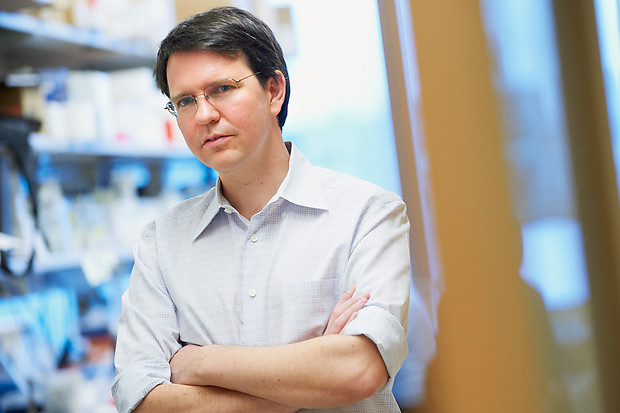
Hans-Guido Wendel
Principal Investigator at the Cancer Genetics Laboratory at Memorial Sloan-Kettering Cancer Center
Participant In These Roundtable Discussions
Sat
Oct 11th
2014
Oct 11th
2014
Watch
Cancer: Body & Mind
This roundtable will examine current advances in the biology of cancer and consider how emerging research informs, and complicates, our understanding of any relationship between mind, immunity, and disease progression.
Thu
Jan 1st
2015
Jan 1st
2015
Watch
Science and the Big Questions: Roundtable Series on the Physical and Spiritual World, the Brain-Mind Connection, and Human Development and Genetics
This series of fourteen roundtables will explore fundamental questions across the sciences and humanities, including knowledge and its limits, infinity, complexity and emergence, consciousness, memory, free will, genius, development, and the nature of human experience.
Sat
Feb 20th
2016
Feb 20th
2016
Watch
Genes, Computers, and Medicine
These roundtables will explore how advances in computational neuroscience, molecular biology, and genomics are transforming understandings of disease, shifting perceptions of illness toward more mechanistic, data-driven, and personalized frameworks, and enabling earlier detection, refined diagnosis, and targeted therapies.