David Chalmers is University Professor of Philosophy and Neural Science and co-director of the Center for Mind, Brain, and Consciousness at New York University. He is the author of The Conscious Mind (1996), Constructing the World (2010), and _Reality+: Virtual Worlds and the Problems of Philosophy (2022). He co-founded the Association for the Scientific Study of Consciousness and the PhilPapers Foundation. He has given the John Locke Lectures and has been awarded the Jean Nicod Prize. He is known for formulating the “hard problem” of consciousness, which inspired Tom Stoppard’s play The Hard Problem, and for the idea of the “extended mind,” which says that the tools we use can become parts of our minds.
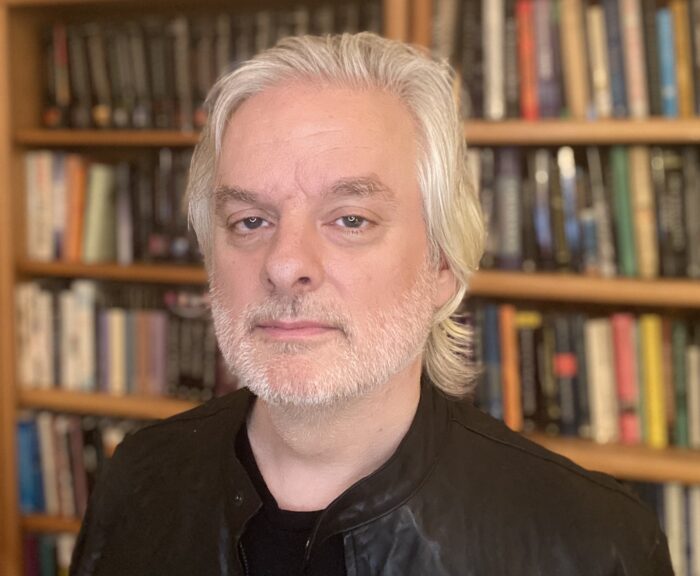
David Chalmers
Professor of Philosophy and Neural Science, New York University
Co-Director, Center for Mind, Brain, & Consciousness, New York University
Papers / Presentations
Participant In These Roundtable Discussions
Sat
Mar 7th
2015
Mar 7th
2015
Watch
Apprehending Consciousness
This roundtable will examine how science approaches the problem of consciousness, and the roles of physics, psychology, psychoanalysis, neuroscience, philosophy, and religion in understanding sentience and self-awareness.
Sat
Oct 15th
2022
Oct 15th
2022
Watch
Coding and the New Human Phenotype
This conference explores the concept of life, knowledge, and experience through the lens of “code,” examining how meaning is encoded, transmitted, and transformed across biological, digital, and cultural systems. Through five roundtables, it investigates how we reconstruct the past, navigate authenticity in a digital world, interpret fiction and ideas, engage with AI-generated language, and consider the possibility that reality itself may be fundamentally computational—together asking what is gained, and what may be lost, as code increasingly mediates our understanding of the world.
Sun
Oct 16th
2022
Oct 16th
2022
Watch
Coding and the New Human Phenotype: Is the Universe a Metaverse?
This roundtable considers the hypothesis that reality itself may be fundamentally computational or information-based. It explores philosophical and scientific perspectives on whether the universe can be understood as a form of simulation or algorithmic process.