Susan Wolfson has taught at UC Berkeley, Rutgers University, and is now Professor of English at Princeton University. She’s a specialist in the literature of British Romanticism, the era of “enlightenment” quests for knowledge and new philosophies of social freedom and social responsibility. She teaches regularly in this field, and when possible, Shakespeare, and Milton’s Paradise Lost, along with in nineteenth-century literature and Modernism. Issues of enlightenment knowledge and social responsibility stir at the heart of Mary Shelley’s Frankenstein, the focus of commentary in the Harvard Annotated Edition (2012) she developed with coeditor Ronald Levao. A related essay, “Frankenstein: Other and Monster,” will appear in the exhibition catalogue for Frankenstein créé des ténèbres (Frankenstein: Creation of Darkness), sponsored by the Bodmer Foundation, Cologny, Switzerland, 2016. Widely published in the field of Romanticism, her recent books include Reading John Keats (Cambridge UP 2015), Romantic Interactions: Social Being and the Turns of Literary Form (Johns Hopkins UP, 2010). Also for Harvard, she is the editor of Northanger Abbey, an Annotated Edition, honored by Austenprose as the #1 Austen-inspired Scholarly Book of 2014. She continues as coeditor, with Peter Manning of The Romantics and Their Contemporaries, an anthology of the period’s literature in the excitement of social, aesthetic, cultural and political contexts (Pearson/Longman; 5th edition 2012). A new article in Studies in English Literature (fall 2015) explores the aesthetic, scientific, and political charges of “lightning” in Enlightenment and Romantic culture: “This is my Lightning” or; Sparks in the Air.”
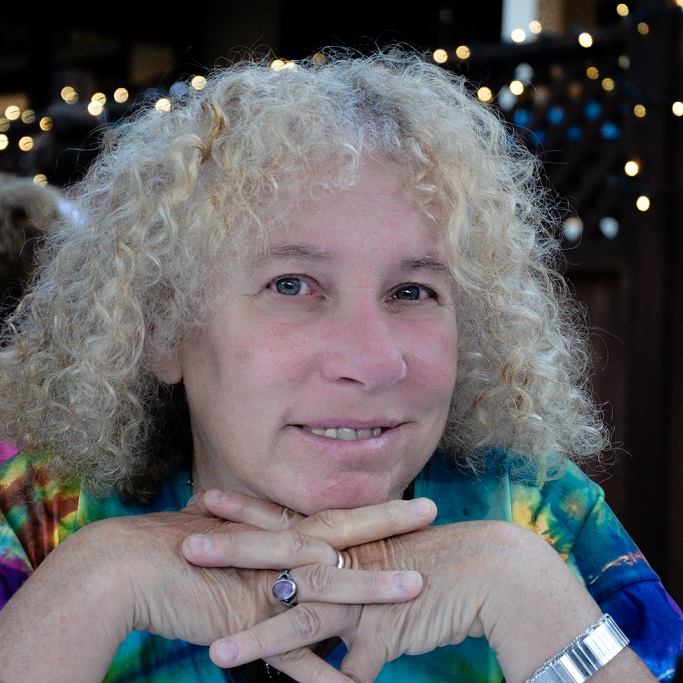
Susan Wolfson
Professor of English, Princeton University
Participant In These Roundtable Discussions
Thu
Jan 1st
2015
Jan 1st
2015
Watch
Science and the Big Questions: Roundtable Series on the Physical and Spiritual World, the Brain-Mind Connection, and Human Development and Genetics
This series of fourteen roundtables will explore fundamental questions across the sciences and humanities, including knowledge and its limits, infinity, complexity and emergence, consciousness, memory, free will, genius, development, and the nature of human experience.
Sat
Oct 24th
2015
Oct 24th
2015
Watch
The Realm of Mystery
This roundtable will examine the philosophical problem of knowledge and ignorance, considering how we come to recognize the limits of what we know and how “known unknowns” and “unknown unknowns” can be progressively identified through inquiry, reflection, and dialogue.