Paul H. Fry, BA Berkeley, Ph D Harvard, began teaching at Yale in 1971. His primary fields are British Romanticism, the History of Criticism, Literary Theory and Literature and Painting. He is also a painter and has written art criticism for Art News. The Poet’s Calling in the English Ode (1980) received the Melville Caine Award of the Poetry Society of America. He was Director of Graduate Studies in English for eighteen years and Head (then Master) of Yale’s Ezra Stiles College for seven. He served as Chair and Member of the Region II Committee for the Mellon Fellowships in the Humanities for twenty-five years. His online lecture course, “Introduction to Literary Theory,” can be viewed as an OpenYale lecture course or on YouTube. He is the 2011 winner of the Stephen Sondheim Inspirational Teaching Award from the Kennedy Center for the Arts. For many years he was Executive Co-Director of the Yale-New Haven Teachers Institute and its national counterpart, the Yale National Initiative. In addition to the book mentioned above, with a Coleridge edition and many articles and reviews, he has written The Reach of Criticism (1983), William Empson: Prophet Against Sacrifice (1991), A Defense of Poetry: Reflections on the Occasion of Writing (1995), Wordsworth and the Poetry of What We Are (2008), and Theory of Literature (2012).
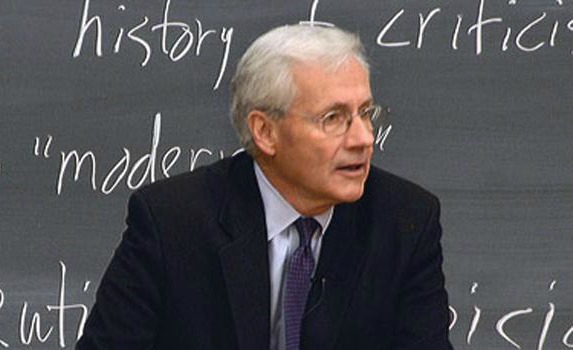
Paul Fry
William Lampson Professor of English, Emeritus, Yale University
Participant In These Roundtable Discussions
Sat
Feb 7th
2015
Feb 7th
2015
Watch
The Sublime Experience
This roundtable will examine the sublime across visual arts, music, religious experience, and nature, considering how philosophy, psychology, and neuroscience illuminate the experience and its relation to pleasure and awe.
Fri
Dec 1st
2017
Dec 1st
2017
Watch
Art and Science: The Two Cultures Converging
This series of roundtables brings together artists, scientists, and scholars to explore the intersections of science, art, education, and society through themes of collaboration, interdisciplinary practice, and STEAM education. Across the discussions, participants examine how these fields inform one another, how such collaborations are formed and sustained, and how they may shape future approaches to knowledge, creativity, and learning.
Sat
Feb 21st
2026
Feb 21st
2026
Watch
Why We Write
This roundtable explores the motivations and purposes behind writing, challenging the idea that words simply convey facts. It examines how writing can express ambiguity, emotion, intention, and persuasion, shaping both meaning and experience.