Tim Maudlin is Professor of Philosophy at New York University. He received his B. A. in Physics and Philosophy from Yale and his Ph.D. in History and Philosophy of Science from the University of Pittsburgh. His work centers on the interpretation of physical theory: how the mathematical structures used in physics may be understood as presenting a physical account of the world. His most recent books are Philosophy of Physics: Space and Time and New Foundations for Physical Geometry. He is a Guggenheim fellow, a fellow of the American Academy of Arts and Sciences, a fellow of the American Counsel of Learned Societies, and a member of the Academie Internationale de Philosophie des Sciences.
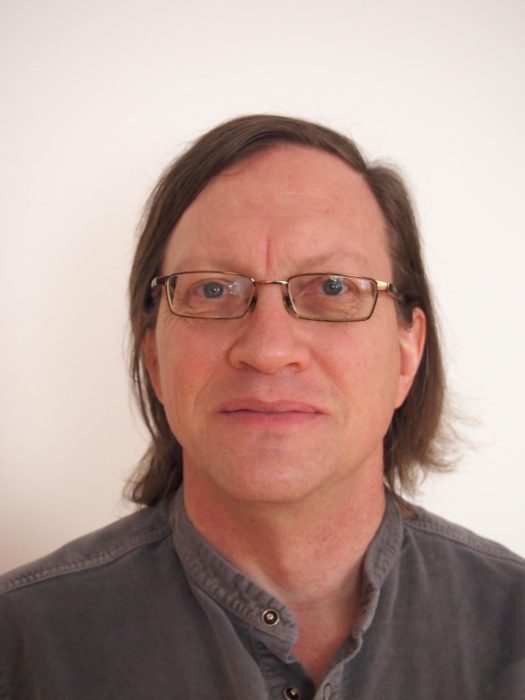
Tim Maudlin
Professor of Philosophy, New York University
Participant In These Roundtable Discussions
Sat
May 5th
2012
May 5th
2012
Watch
Where Does It Begin?
This roundtable will examine our curiosity about beginnings, including what constitutes a beginning and how such concepts may apply to both individual consciousness and the universe.
Sat
Sep 20th
2014
Sep 20th
2014
Watch
Knowledge and Limitations
This roundtable will examine the scope and limits of human knowledge about the universe, and whether metaphysical inquiry can be integrated with empirical approaches to understanding nature.
Sat
May 20th
2017
May 20th
2017
Watch
Complexity and Emergence II: Visions of Cosmic Order, from Particles to People
This roundtable explores the emergence of complexity and order across scales—from fundamental physical particles to biological systems and human civilization—examining whether recurring principles of combination and integration give rise to distinct levels of organization. It considers how complexity evolves over time, how novel structures and behaviors emerge at different stages of the universe, and what these patterns reveal about the development of matter, life, culture, and consciousness.
Sat
May 12th
2018
May 12th
2018
Watch
The Completeness of Physics
This roundtable examines whether science’s empirical success implies a universal account of reality, or whether reality is better understood as consisting of multiple ontological levels and a plurality of scientific frameworks. It considers tensions between reductionist and pluralist views, and reflects on the implications of these positions for the status of the humanities, the possibility of a unified theory of reality, and the limits of human cognition in grasping such unity.