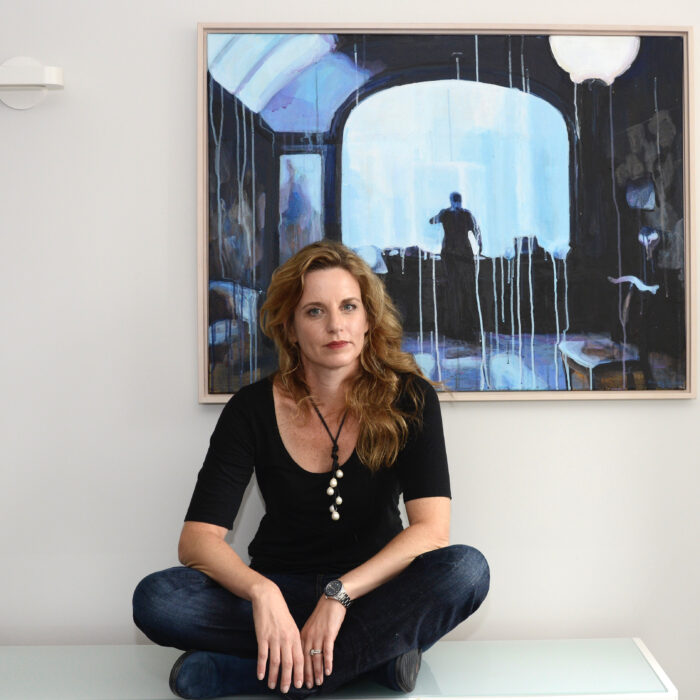
Viviane Silvera is a Telly Award–winning filmmaker and visual artist whose work bridges neuroscience, psychology, and fine art to explore how memory shapes—and reshapes—our sense of self. Her acclaimed film See Memory—crafted from over 30,000 hand-painted frames—translates scientific insight into poetic visual storytelling, illustrating how trauma fragments memory and how healing becomes possible through presence, imagination, and narrative.
Silvera’s work has been exhibited internationally for over two decades, including at Art Basel Miami, Berlin Art Week, and the Bill & Melinda Gates Foundation. Her moving image and painted works are held in the permanent collections of Vanderbilt University, the Clinton Presidential Library, Duke University, and others. Her practice has been supported by the National Academy of Fine Arts and featured in Authority Magazine’s “Inspirational Women of the Speaking Circuit” series.
Born in Hong Kong and raised in Brazil, Silvera holds a BS in Psychology and Political Science from Tufts University and an MFA from the New York Academy of Art. She is the founder of On Art, an interdisciplinary studio dedicated to exploring memory, trauma, and transformation through hand-painted film.