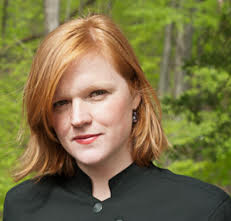
Dana is a research-based artist working with digital imagery, sculpture, installation, and painting. Her research explores the human (and post-human) relationship to the environment by colliding speculative architecture with empirical observation. This is driven by her love of the ironic in architecture—including intentional and unintentional zoomorphic structures, her fear of storms and the ocean—and her fascination observing and being in a constant state of motion. Her process is driven by visceral interpretations of a phenomena (scientific, natural, cultural or unknown) through digital and analog processes.
Dana also served as Media Director of Maya Lin’s fifth and final memorial, What is Missing?, providing creative and operational execution on this world-wide, on-going project regarding climate change and endangered species. She continues to be on-going advisor on the memorial.
She is a full-time lecturer of Integrated Digital Media in the Department of Technology, Culture and Society at New York University. Dana has also taught at NYU’s ITP, NYU’s Courant Institute of Mathematical Sciences, at Columbia University’s Graduate School of Architecture Planning and Preservation, and at Harvestworks digital media center in NYC.
Dana’s work has been show across galleries, museums and festivals including: the Federation of Canadian Artists’ Federation Gallery; The Caracas Contemporary Art Museum; The London Festival of Architecture; The Museum of the Moving Image; The Chelsea Art Museum; Exit Art; and The DUMBO Arts Festival.
Dana holds a Bachelor of Architecture from the School of Architecture, Design, and Planning at the University of Kansas. She has a Masters from The Interactive Telecommunications Program (ITP) at NYU’s Tisch School of the Arts.