Jonathan Kramnick is Maynard Mack Professor of English at Yale University. His research and teaching is in eighteenth-century literature and philosophy, philosophical approaches to literature, and cognitive science and the arts. He is the author of three books. His new book, Paper Minds: Literature and the Ecology of Consciousness (Chicago, 2018), asks what distinctive knowledge the literary disciplines and literary form can contribute to discussions of perceptual consciousness, created and natural environments, and skilled engagement with the world. Portions have appeared in Critical Inquiry, Representations, and elsewhere. Before that, Actions and Objects from Hobbes to Richardson (Stanford, 2010) considered representations of mind and material objects along with theories of action during the long eighteenth century. And before that, Making the English Canon: Print Capitalism and the Cultural Past, 1700-1770 (Cambridge, 1999) examined the role of criticism and aesthetic theory in the creation of a national literary tradition. His current research is on the aesthetics and perception of designed environments, including the garden, the park, and the house. Finally, he is director of the Lewis Walpole Library and the editor (with Steven Pincus) of the Lewis Walpole Series in Eighteenth-Century Culture and History for Yale University Press.
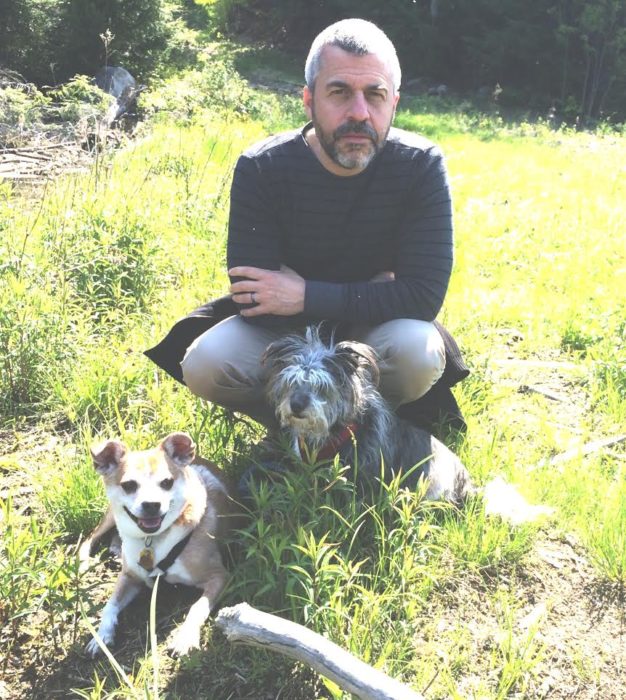
Jonathan Kramnick
Maynard Mack Professor of English, Yale University
Participant In These Roundtable Discussions
Sat
Feb 10th
2018
Feb 10th
2018
Watch
Mind Matters: Past, Present, and Future
This roundtable traces the evolving understanding of mind from ancient philosophical and theological conceptions to contemporary accounts grounded in neuroscience, cognitive science, and computational models. It considers how advances across multiple scientific disciplines have reshaped ideas of mental phenomena, while also reflecting on the continuing roles of metaphysics and theology in interpreting the nature, limits, and future of mind, including speculation on how the concept of mind itself may change in the next century.
Sat
May 12th
2018
May 12th
2018
Watch
The Completeness of Physics
This roundtable examines whether science’s empirical success implies a universal account of reality, or whether reality is better understood as consisting of multiple ontological levels and a plurality of scientific frameworks. It considers tensions between reductionist and pluralist views, and reflects on the implications of these positions for the status of the humanities, the possibility of a unified theory of reality, and the limits of human cognition in grasping such unity.
Sat
Oct 15th
2022
Oct 15th
2022
Watch
Coding and the New Human Phenotype
This conference explores the concept of life, knowledge, and experience through the lens of “code,” examining how meaning is encoded, transmitted, and transformed across biological, digital, and cultural systems. Through five roundtables, it investigates how we reconstruct the past, navigate authenticity in a digital world, interpret fiction and ideas, engage with AI-generated language, and consider the possibility that reality itself may be fundamentally computational—together asking what is gained, and what may be lost, as code increasingly mediates our understanding of the world.
Sat
Oct 15th
2022
Oct 15th
2022
Watch
Coding and the New Human Phenotype: Coding, Fiction, Metafiction – the Parcellation of What Isn’t There
This roundtable explores how fiction and ideas are encoded, transmitted, and transformed within culture. It considers the role of narratives, memes, and metafiction in shaping meaning and distinguishing fact from fiction.