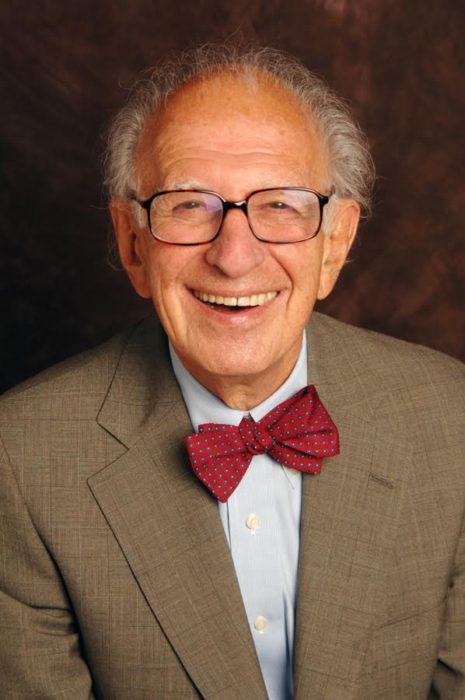
Eric R. Kandel, M.D., is University Professor at Columbia; Kavli Professor and Director, Kavli Institute for Brain Science; Co-Director, Mortimer B. Zuckerman Mind Brain Behavior Institute; and an Investigator at the Howard Hughes Medical Institute. A graduate of Harvard College and N.Y.U. School of Medicine, Kandel trained in Neurobiology at the NIH and in Psychiatry at Harvard. He joined the faculty of the College of Physicians and Surgeons at Columbia University in 1974. At Columbia Kandel organized the neuroscience curriculum. He is an editor of Principles of Neural Science, the standard textbook in the field now in its 5th edition. His previous book on art, The Age of Insight: The Quest to Understand the Unconscious in Art, Mind, and Brain From Vienna 1900 to the Present won the Kreisky Award in Literature, Austria’s highest literary award. Kandel’s new book entitled, Reductionism in Art and Brain Science: Bridging the Two Cultures, published by Columbia University Press has just been released.
Kandel’s research has been concerned with the molecular mechanisms of memory storage in Aplysia and mice. Recently, he has studied age-related memory disorders, post-traumatic stress disorders, nicotine, alcohol, marijuana, and cocaine addiction.
Kandel has received twenty-three honorary degrees. He has been recognized with the Albert Lasker Award, the Heineken Award of the Netherlands, the Gairdner Award of Canada, the Harvey Prize and the Wolf Prize of Israel, the National Medal of Science USA and the Nobel Prize for Physiology or Medicine in 2000.