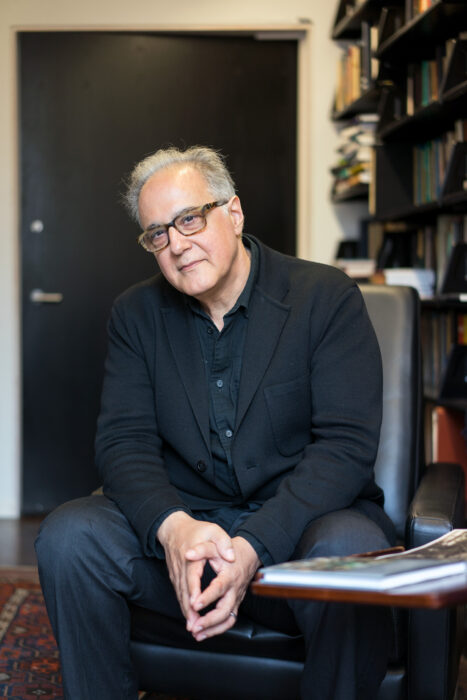
Paul Artin Boghossian is Silver Professor of Philosophy at NYU and Director of its Global Institute for Advanced Study. He earned a PhD in Philosophy from Princeton University and a B.Sc. in Physics from Trent University.
Elected to the American Academy of Arts and Sciences in 2012, his research interests are primarily in epistemology, the philosophy of mind, and the philosophy of language. He has written on a wide range of topics, including naturalism, self-knowledge, a priori knowledge, analytic truth, moral realism and relativism, aesthetics, and the concept of genocide. He is the author of Fear of Knowledge: Against Relativism and Constructivism (Oxford, 2006), which has been translated into thirteen languages, including Chinese, Japanese, Farsi, Spanish, German, Italian, and French; Content and Justification (Oxford, 2008); and Debating the A Priori (with Timothy Williamson, Oxford, 2020). He is currently at work on a book on norms.
At NYU since 1991, he has also taught at the University of Michigan at Ann Arbor, Princeton, the Ecole Normale Superieure in Paris, and has served as Distinguished Research Professor at the University of Birmingham in the UK.